


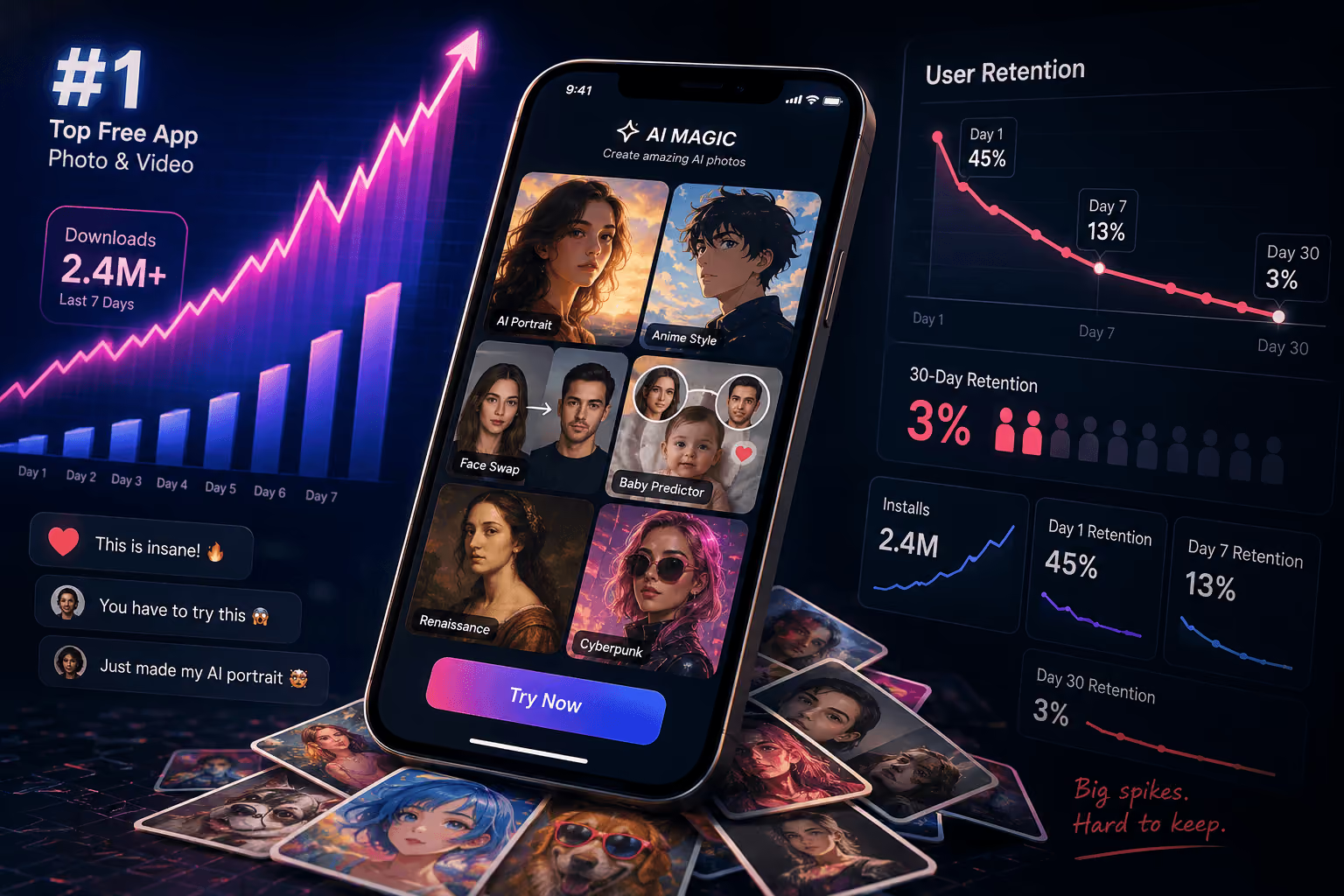
Over the past two years, a specific category of app has emerged as one of the fastest-growing segments in mobile. Generative AI experiences (photo transformers, avatar generators, face-swap tools, AI baby predictors) repeatedly spike to the top of download charts within days of launch, sometimes hours.
The growth mechanics behind that kind of adoption are worth understanding. These apps have figured out something important about how modern users respond to certain types of mobile experiences. But their retention patterns tell a different story, and that gap between install volume and lasting engagement is where most of the strategic insight lives.
For mobile marketers and app growth teams, viral AI apps are a useful case study in how acquisition and retention interact, and why optimising for one without the other tends to produce results that look good until they do not.
Curiosity is a powerful acquisition driver, but a narrow one
The install mechanic behind most viral AI apps is structurally simple. The app makes a promise (see what you would look like as an anime character, combine two faces to predict a baby, transform your photo into a Renaissance portrait) and users act on that promise before they have any real relationship with the product.
That kind of curiosity-driven install is fast to generate, partly because the conversion barrier is so low. There is no long onboarding sequence, no complex value proposition to communicate. The app promises one specific, visually interesting outcome, and the gap between install and that outcome is measured in seconds.
What makes this acquisition pattern particularly efficient is that it does not depend heavily on paid media to get started. A single post showing the output can drive tens of thousands of installs before any ad budget runs. The challenge is that the same thing that makes curiosity such a strong acquisition driver, the promise of one immediate and novel result, also defines its ceiling. Once that result has been delivered, the incentive to stay is much less clear.
Sharing mechanics extend reach in ways paid media cannot replicate
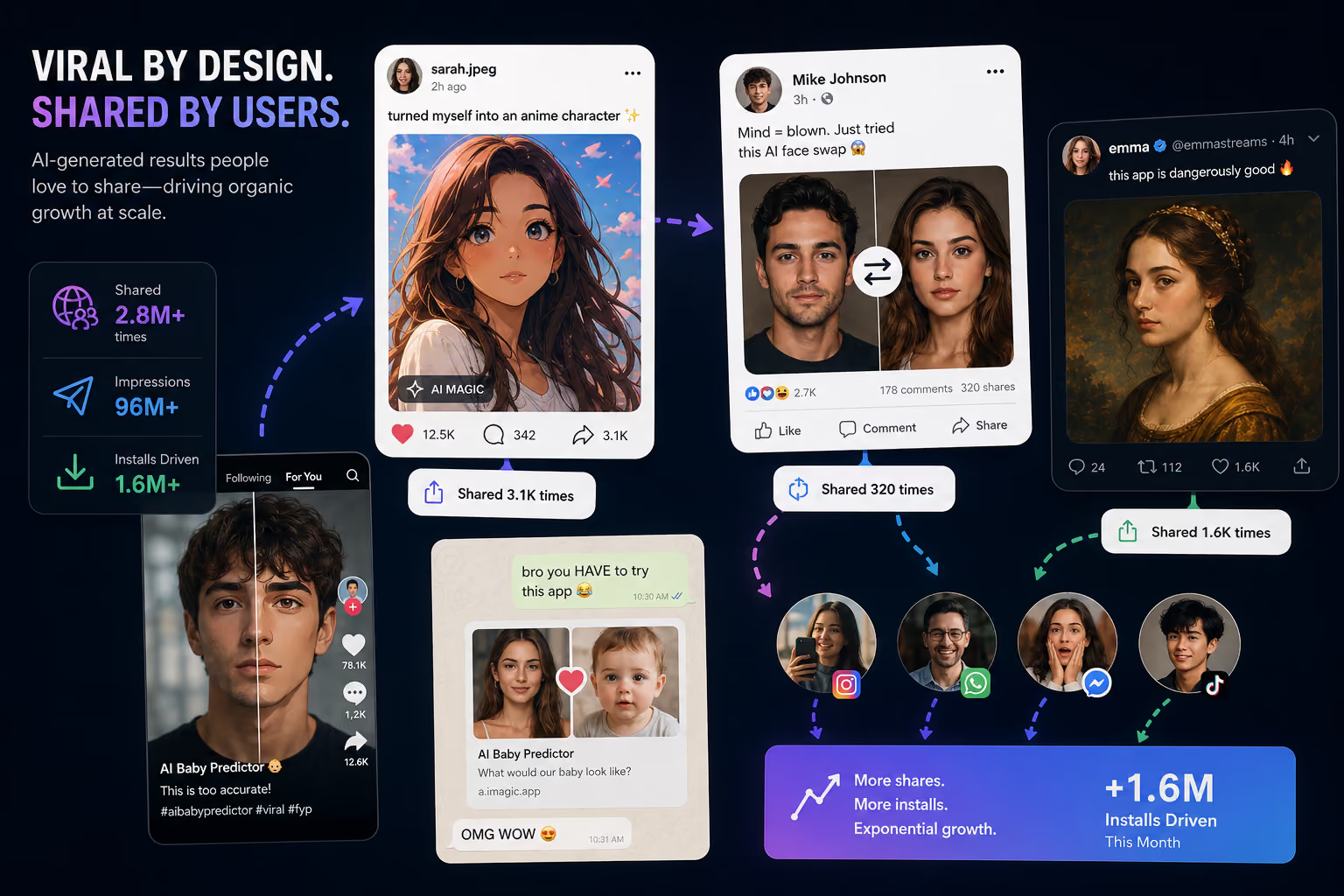
The distribution pattern behind the most successful viral AI apps is not primarily paid. It is content-led, and the content comes from users.
When an app produces a result that is surprising, funny, or aesthetically interesting, users share it. That share travels across messaging platforms and social feeds, lands in front of people who had not heard of the app and drives them to download it to try the experience themselves. Each shared output functions as unpaid distribution with a personalised recommendation attached.
What makes this pattern particularly effective is that the content carries implicit social proof. A friend sharing an AI-generated portrait of themselves is a more persuasive prompt to download than most ad creative. The result feels authentic because itis.
For growth teams, this creates areal optimisation question: which outputs are users most likely to share, and what product decisions influence that? Apps that have extended their viral lifecycle tend to be deliberate about the design of the shareable moment: the quality of the output, the ease of the export, the visual format of the result. That is a product decision with direct acquisition consequences, and one that paid media alone cannot compensate for if it is not working.
The monetisation window is short, and most apps are not ready for it
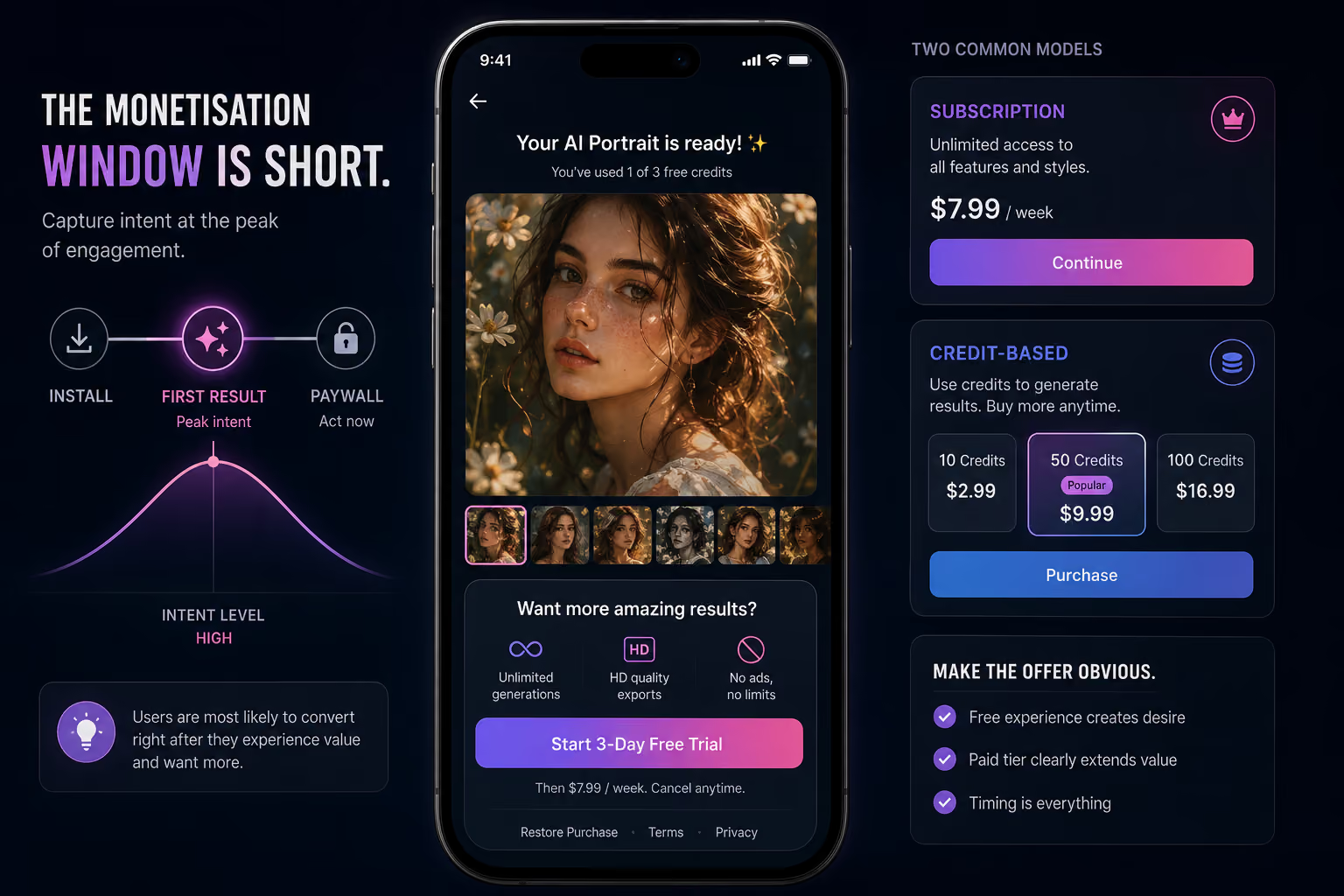
Curiosity-driven apps typically have a narrow window in which users are most receptive to a monetisation prompt. That window sits immediately after the first result, before novelty fades, when the user has experienced the value of the app and wants more of it.
Most viral AI apps use one of two models at this point. Subscription trials offer unlimited access for a short period before converting to a paid tier. Credit-based systems let users generate a fixed number of results before hitting a paywall. Both approaches are designed to capture intent at the peak of engagement.
The challenge is that many apps reach this moment without the infrastructure to make it convert. If the paywall appears before the user has experienced genuine value, conversion rates drop sharply. If the premium offer does not clearly extend beyond what the free tier provides, there is limited incentive to upgrade. The apps that monetise this window well tend to share one thing: the free experience is good enough to create real desire for more, and the paid tier makes that feel obvious rather than forced.
Retention is where viral AI apps consistently break down
The retention problem incuriosity-driven apps is structural. When the core value proposition is a single experience (generate this one result), there is no inherent reason to return once that result has been produced.
This shows up clearly in cohort analysis. Viral AI apps typically see strong day-1 retention, driven by users exploring the initial output. By day 7, a significant portion of that cohort as not returned. By day 30, the retained base often represents a small fraction of the original install volume. The apps that generate the biggest download spikes are frequently not the ones with the strongest underlying retention metrics.
The apps that extend their lifecycle do it by adding genuine reasons to return: new styles and creative tools that update regularly, community or social layers that create ongoing engagement, personalisation that makes the experience feel different on subsequent visits, and notification strategies that reconnect users to the app when new features are available.
None of these are easy to build quickly, which is partly why so many apps in this category follow the same arc: a sharp growth curve followed by an equally sharp decline. The viral mechanic works. The retention architecture was never built.
What this means for UA strategy in AI app categories
For mobile marketers working in or adjacent to AI app categories, the growth patterns described here have direct implications for how UA campaigns should be structured.
The install metric overstates real performance in curiosity-driven categories. An app that acquires millions of users through a viral spike but retains a small fraction of them at 30 days has a fundamentally different business than one with lower install volume and strong retention. Campaign reporting that stops at install, or even at day-1retention, will consistently mislead optimisation decisions.
Paid UA in these categories also needs to work in coordination with the organic viral loop, not in isolation from it. The apps that scale paid efficiently tend to be those that understand which organic cohorts retain well and use that signal to inform targeting and bidding models for paid channels. Scaling spend before that signal exists tends to inflate install volume without improving the metrics that matter.
Fraud risk is also elevated in high-volume, fast-growing categories. When an app is climbing charts quickly and bidding aggressively, it becomes an attractive target for install fraud and engagement manipulation. Without robust traffic quality controls in place, wasted spend in viral AI categories can quietly distort the data that growth decisions are built on.
The broader pattern: what viral AI apps reveal about modern mobile growth
Beyond the category specifics, viral AI apps illustrate something more general about how growth behaves in the current mobile environment.
Discovery is faster and more distributed than it has ever been. A well-designed app with a shareable output mechanic can reach millions of users through social channels before any significant paid budget has been deployed. The barrier to initial adoption has dropped substantially.
Retention, however, has not become easier. Users have more apps competing for their attention, shorter patience with experiences that do not immediately demonstrate ongoing value, and a lower threshold for churning to the next novel thing.
The mobile apps building durable growth right now are not the ones with the sharpest install spikes. They are the ones that understood early that acquisition and retention are one system, not two separate workstreams, and built both sides of that system deliberately.


_2026-07-10_08-13-59.avif)